Winning the First Minute: Why the First 60 Seconds Matter for Successful Meetings
Guests are queuing.
The waiting room fills.
You check the time. The host checks on you. “Are you ready?”
“Ready to go,” you reply.
The meeting is ready to start. It’s time for you to win the first minute.
What is “winning the first minute”?
For years, I led meetings with Members of Congress, governors, and CEOs on a nearly weekly basis. During those years, I had a saying, “Win the first minute or spend the next fifty-nine winning it back.”
In its purest sense, winning the first minute meant the initial impression had to be a spot-on, positive, expectation-exceeding moment in time. High bar for sixty seconds? Not really. We figured if a meeting attendee was willing to put their most precious resource—time—on the line, a near immediate validation of their investment was not asking all that much. It was an approach that served me, as the lead presenter, well, leading to new, deeper, and meaningful relationships, and it’s an approach you can benefit from as well.
Why is the first minute so important?
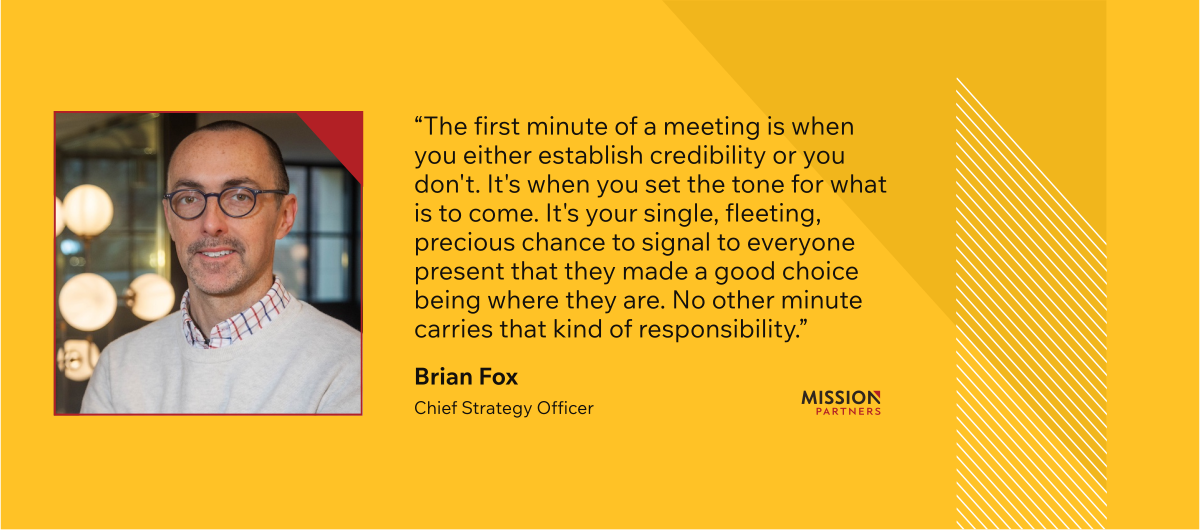
The first minute of a meeting is when you either establish credibility or you don’t. It’s when you set the tone for what is to come. It’s your single, fleeting, precious chance to signal to everyone present that they made a good choice being where they are. No other minute carries that kind of responsibility.
Have a successful first minute and make an error twenty minutes later, no problem. By then, you’ve got the benefit of the doubt built up and on your side. The first minute brings no assurance of the benefit of the doubt. There are no guarantees that success will follow if the first minute is won, but losing it almost certainly means you are working from behind before you ever really start, and that’s not a good way to maximize anyone’s investment.

How do you win the first minute?
Each meeting you lead will have unique characteristics, but following these tips can help set you on a path to winning the first minute and the minutes that follow:
- Respect it
Winning the first minute starts with respecting it. Go into it with a plan. Meetings can be weeks in the making. Hour upon hour can go into crafting the messages, developing the visuals, building the talk track, practicing with the materials, and full rehearsals. The investment can be immense, and the stakes can be high. As you prepare for your meetings, make sure you spend a proportionate amount of time on how you will start the meeting. Be clear on your role and the roles of your colleagues. Have a primary way you intend to open the meeting, with an alternative approach in mind as well, and practice them with your team.
- Do your homework
As part of your plan, do homework on your attendees. Know something about where they are from. Research who they know that you know. Explore what they have recently written about. Gather up this insight and use it to prepare a few opening comments or connections you can make between your work and their worlds. When you deploy these observations as you welcome attendees and start your meeting, either in-person or virtually, your intentionality will signal that you respect their investment of time because you’ve invested time of your own in them already.
- Assess the situation
As you’re attendees arrive, it’s critical to “read the room” rapidly for who the leader is, who the skeptics are, and what the energy is. Knowing who the leader is will allow you to appropriately direct your primary attention in the first minute and throughout your time together. Sensing who the probable skeptics are through body language and the initial tone of greetings can help you to identify from where the likely questions will come and who you’ll need to work to slowly win over. Getting a feel for the energy that attendees are bringing to a space will position you to match it so you don’t overwhelm them with your pace and cadence, or come in too sluggish for what they need for an optimal experience.
- Project confidence
If the meeting space allows, use movement to your advantage. When attendees arrive, proceed physically toward your guests and greet them warmly, by name, and with an in-culture appropriate gesture such as a firm handshake. Going to them gives you forward momentum, which can help you build and convey confidence. And when you greet your attendees, use some of your homework to begin connecting with them in meaningful, relevant ways.
- Tell them why you
When the moment comes to turn to your meeting content, let them know why you are the one leading them and where you will take them during your time together. Drawing a connection to your personal relevance to the topics adds to your credibility and should validate to your attendees that they are in good hands with you at the helm of the meeting.
- Take a moment
As that first minute draws to a close, and you are about to embark on the rest of your journey together, take a pause. Embrace a brief silence. Scan the virtual or in-person space and read the visual cues that you observe. With that brief silence-induced attention gathering complete, look your guests in the eye and make sure they are with you. Ask if there are any questions, answer them as best as you can, and then let them know it’s time to get started.
No one meeting is exactly the same, but by planning ahead and approaching the first minute as the most important one you have, you’ll be well on your way to winning it. If you want support on planning for, navigating, and winning your first minute, please reach out at brian@mission.partners. I’d love to support you.


 Check out our new