The Value of Core Competencies
How we built up team culture through values-aligned expectations
Mid-year review season is in full swing at Mission Partners, and if your team is like ours, you’re drafting your review, sourcing feedback for your direct reports, and striving for meaningful mid-year review conversations.
For the past few years, we’ve taken a slightly different approach to performance reviews at Mission Partners. Yes, we need to know if people are delivering on their goals and we have a mechanism for measuring that. But we also want to understand how they’re showing up for their colleagues and our clients.
But how to measure that?
Several years ago, with this question in mind, we built a values-aligned competency framework that clearly defines what excellence looks like at each level of our organization and outlines the behaviors that support our team culture.
We call it Mission Partners Values in Action.
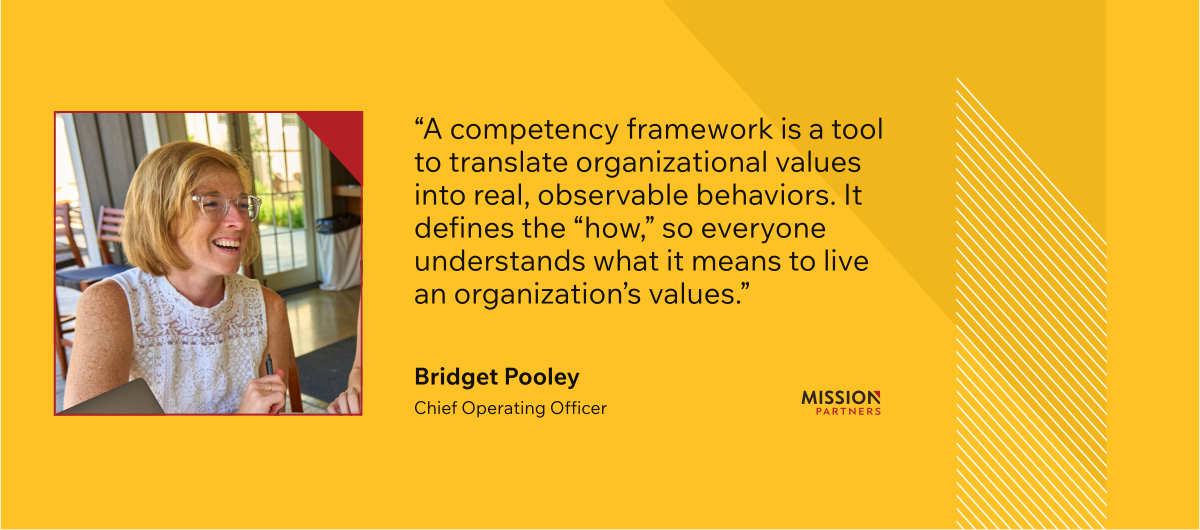
A competency framework is a tool to translate organizational values into real, observable behaviors. It defines the “how,” so everyone understands what it means to live an organization’s values.
Since implementing the tool, we’ve seen several immediate benefits. Our Values in Action
- Clarifies expectations at every level, from new hires to our most tenured team members
- Creates consistency in how people managers give feedback and guide development (it even gives people managers specific language they can reference when giving feedback!)
- Celebrates strengths and culture contributions in addition to goal accomplishment
- Supports equitable decision-making for promotions, compensation changes, and leadership opportunities
Our Values in Action includes 16 core competencies tied to our five values, from People Come First to Continuous Learning and Growth. For each, we outline behaviors by role, ensuring everyone is held accountable for living the same values.
Interestingly, after adopting this internally, we noticed that several of our clients were grappling with this challenge in their workplaces. We’ve since applied this tool to several nonprofit and foundation partners, helping leadership teams define values-aligned performance and expectations. As a result, these teams are more effective and have clear expectations about organizational culture.
If you’re thinking about whether a competency framework could improve performance and outcomes at your organization, here are a few places you might start, as well as some questions to guide your thinking:
- Ground it in your values. Competencies are strongest when they’re rooted in what matters most to your organization and reflect your values. Before building a framework, stress-test your values to ensure they’re clear and accurate and the team is on board with them. Consider:
- What values do you want to see reflected in the everyday behaviors of your team?
- How will the framework help you create clarity and consistency within your organization?
- Don’t overdo it. A strong framework will provide structure, not create unnecessary or burdensome process. Make sure the model you build is simple to follow and not outsized for your organization.
- How do your expectations vary by level or role within your organization?
- How will you ensure the framework is inclusive and allows for diverse styles and strengths?
- Make a plan to roll it out. Creating the framework is just the first step; make sure you’re building training, tools, and even incentives for utilizing the tool. One part of our year-end bonus is tied to the completion of our values in action assessment. Consider:
- How will you integrate the framework into existing HR processes, such as employee reviews, hiring, or promotion decisions?
- How might you build buy-in or excitement across the organization for the tool?
If you want to explore how your organization can measure and support excellence via a values-aligned competency framework, I’d love to chat – drop me a line at bridget@mission.partners.




 Check out our new